

Hummingbirds are fascinating creatures known for their vibrant colors and incredible flying abilities. But what many don’t realize is the dedication and care these tiny birds show when feeding their young. Understanding what hummingbirds feed their babies reveals insights into their nurturing behavior and the vital role nutrition plays in their development.
When it comes to feeding their chicks, hummingbird mothers rely on a diet that’s rich in energy and nutrients. This ensures the rapid growth of their young, who are entirely dependent on their mother during the early stages of life. From nectar to insects, the choices are both interesting and essential for the survival of these delicate birds. Exploring this topic uncovers the intricacies of nature’s feeding habits and the remarkable bond between hummingbird mothers and their offspring.
Understanding Hummingbird Nutrition
Hummingbird chicks rely on a nutrient-rich diet to thrive. Mother hummingbirds primarily feed them a mixture of nectar and insects.
Nectar provides essential carbohydrates, fueling the rapid growth of the chicks. Nectar from various flowers creates a diverse diet, ensuring chick development. High-sugar content in nectar supports strong energy levels needed for growth.
Insects supply crucial proteins and fats. Depending on availability, mother hummingbirds collect small insects, spiders, and larvae. These protein sources support muscle development and overall health in the young birds.
Mothers exhibit remarkable feeding behavior while preparing meals. Mothers digest nectar and insects before regurgitating the mixture for their chicks. Feeding occurs frequently, often every 15 to 20 minutes, meeting the high-energy demands of growing birds.
Understanding the balance of nectar and insect consumption provides insight into the maternal commitment of hummingbirds. This nutrient-rich feeding process illustrates the intricate relationship between mother and offspring in their rapid developmental stages.
Hummingbird Baby Feeding Process
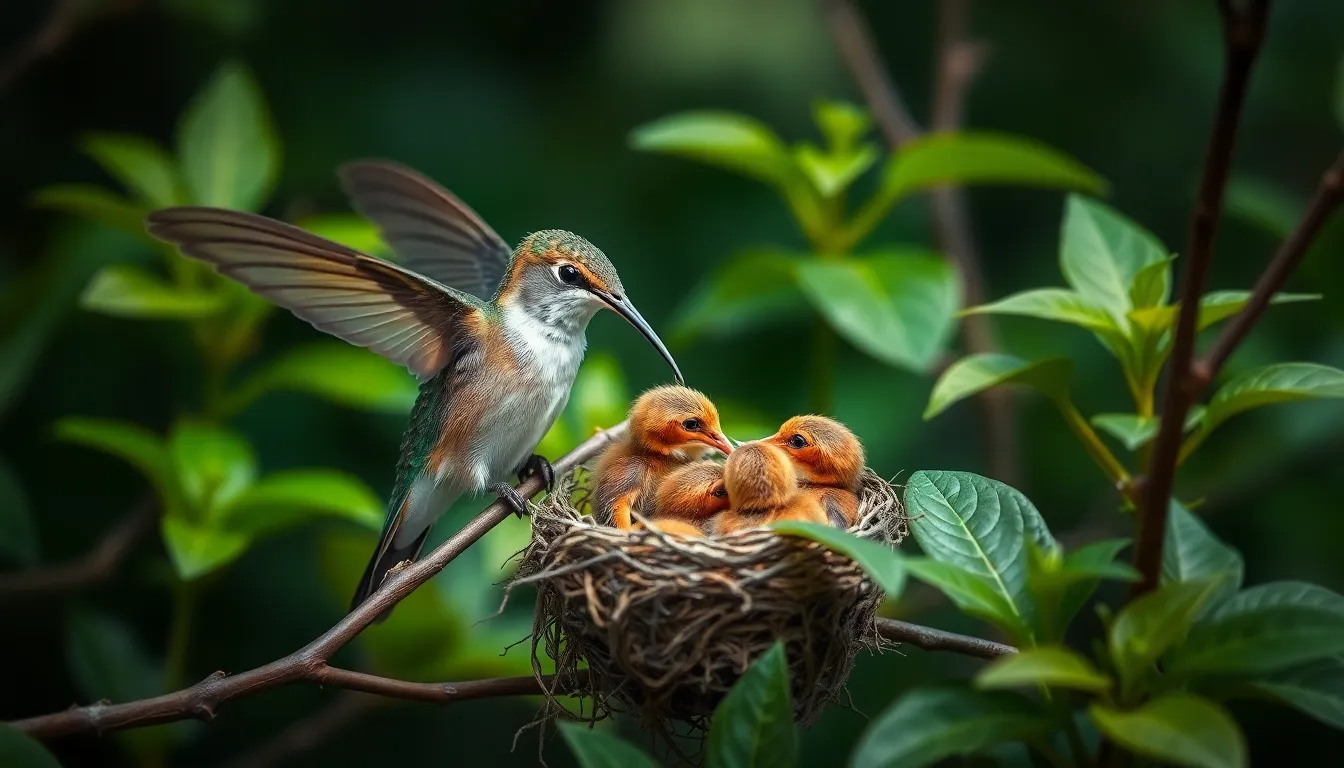
Hummingbird chicks rely heavily on their parents for nutrition during their early stages of development. The feeding process showcases the dedication and efficiency of the parents in providing essential sustenance.
Role of the Parents
Mother hummingbirds play a key role in feeding their chicks. They meticulously prepare a nutrient-rich diet consisting of regurgitated nectar and insects. This mixture offers the carbohydrates, proteins, and fats necessary for chick growth. Both parents show involvement; fathers often support nest protection and territory defense, allowing mothers to focus on feeding. The nurturing bond between mother and young remains strong, with females frequently feeding their chicks multiple times throughout the day.
Timing of Feeding
Feeding occurs every 15 to 20 minutes during daylight hours. Timing is crucial, as rapid growth requires frequent nourishment. The chicks’ hunger cues prompt immediate responses from the mother, ensuring that they receive the nutrients needed to thrive. This regular feeding schedule reinforces the importance of nutrition in growth and development, showcasing the mother’s commitment to her offspring’s survival and health.
What Do Hummingbirds Feed Their Babies?
Hummingbirds feed their babies a diet rich in nutrients essential for growth and development. This diet primarily consists of nectar and small insects, which together provide the necessary energy and proteins for their young.
Types of Food
- Nectar
Nectar serves as the primary food source, offering vital carbohydrates. Mother hummingbirds frequently collect nectar from flowers to sustain their chicks.
- Insects
Insects like fruit flies and aphids supply essential proteins and fats. These nutrients aid in muscle development and overall health, allowing the chicks to thrive.
- Pollen
Along with nectar, some hummingbirds may include pollen in their diet. Pollen contributes additional proteins, enriching the nutritional content of the chicks’ meals.
Nutritional Requirements
- Carbohydrates
Carbohydrates from nectar furnish rapid energy needed for growth. Chicks consume significant amounts to support their energy levels.
- Proteins
Proteins from insects and pollen are critical for developing muscles and tissues. A balanced intake ensures healthy growth.
- Fats
Healthy fats play a role in supporting overall health and energy. These are crucial, especially during the early stages of development.
- Vitamins and Minerals
Vitamins and minerals found in insects and nectar enhance immune function and growth. A diverse diet ensures adequate nutrient intake for optimal health.
Feeding Techniques of Adult Hummingbirds
Adult hummingbirds employ various feeding techniques to efficiently gather food for themselves and their chicks. They primarily feed on nectar from flowers, using their specialized long bills and extendable tongues to extract the liquid. By hovering near flowers, they can quickly access nectar sources, enabling rapid intake during their busy feeding sessions.
Adult hummingbirds often utilize spatial memory to locate flowers. They remember which flowers provide the most nectar and revisit them as needed. This strategy optimizes their foraging efforts, ensuring a consistent supply of food.
In addition to nectar, adult hummingbirds consume small insects and spiders. These protein-rich offerings are captured in mid-air or from foliage. Capturing small insects requires agility and precise movements, demonstrating their impressive flying skills.
Hummingbirds also show adaptive feeding behavior. During high nectar scarcity, they may visit a broader range of flowers or seek out more abundant insect sources. This versatility helps them survive in fluctuating conditions.
Both adult and juvenile hummingbirds require significant energy daily. They feed every 10 to 15 minutes to maintain their energy levels. The continuous intake supports their high metabolism, which is necessary for their active lifestyle.
The feeding techniques of adult hummingbirds reflect their evolutionary adaptations and commitment to nurturing their young. This intricate feeding process enhances the chicks’ survival prospects by ensuring they receive a balanced and nutritious diet.
Understanding what hummingbirds feed their babies reveals the remarkable commitment of these tiny birds to their offspring’s survival. The combination of nutrient-rich nectar and protein-packed insects ensures that the chicks receive the essential elements for healthy growth. This intricate feeding process, characterized by frequent and attentive care from both parents, highlights the strength of their bond and the dedication required to raise their young. The dynamic nature of their feeding habits not only supports the rapid development of the chicks but also showcases the adaptability and resourcefulness of hummingbirds in their quest for survival.